
Educational purpose: This guide explains the topic in clear language to help readers make safer, informed, and lawful choices.
A Recovery Key can help you return to an eligible Temp Mail Lab address after closing the browser or switching devices. It restores the supported address or session record; it is not a backup of messages that have already been deleted. This distinction matters because address recovery and message retention use different time limits.
What a Recovery Key Does
When the regular temporary-mail workflow provides a Recovery Key, the key acts as a sensitive credential for the related address or session. Save it securely. Anyone who obtains it may be able to access that inbox while the recovery record remains valid.
An eligible temporary address and its recovery record may remain available for up to the supported recovery period, currently up to 30 days for the regular inbox. This does not mean that messages remain stored for 30 days.
Address Recovery and Message Retention Are Separate
- Address and recovery record: an eligible regular address or session can remain recoverable for up to 30 days.
- Incoming messages: messages are short-lived and are normally deleted about 15 minutes after receipt. They may disappear sooner after manual deletion, inbox expiry, security review, or maintenance removal.
- Deleted messages: a Recovery Key cannot restore a message that has already expired or been deleted.
- 10 Minute Mail: this separate tool uses a short server session and does not issue a Recovery Key.
How to Save and Use Your Recovery Key
1. Create a regular temporary inbox
Open the Temp Mail Lab homepage and use the regular temporary-mail service. The address is separate from the 10 Minute Mail tool.
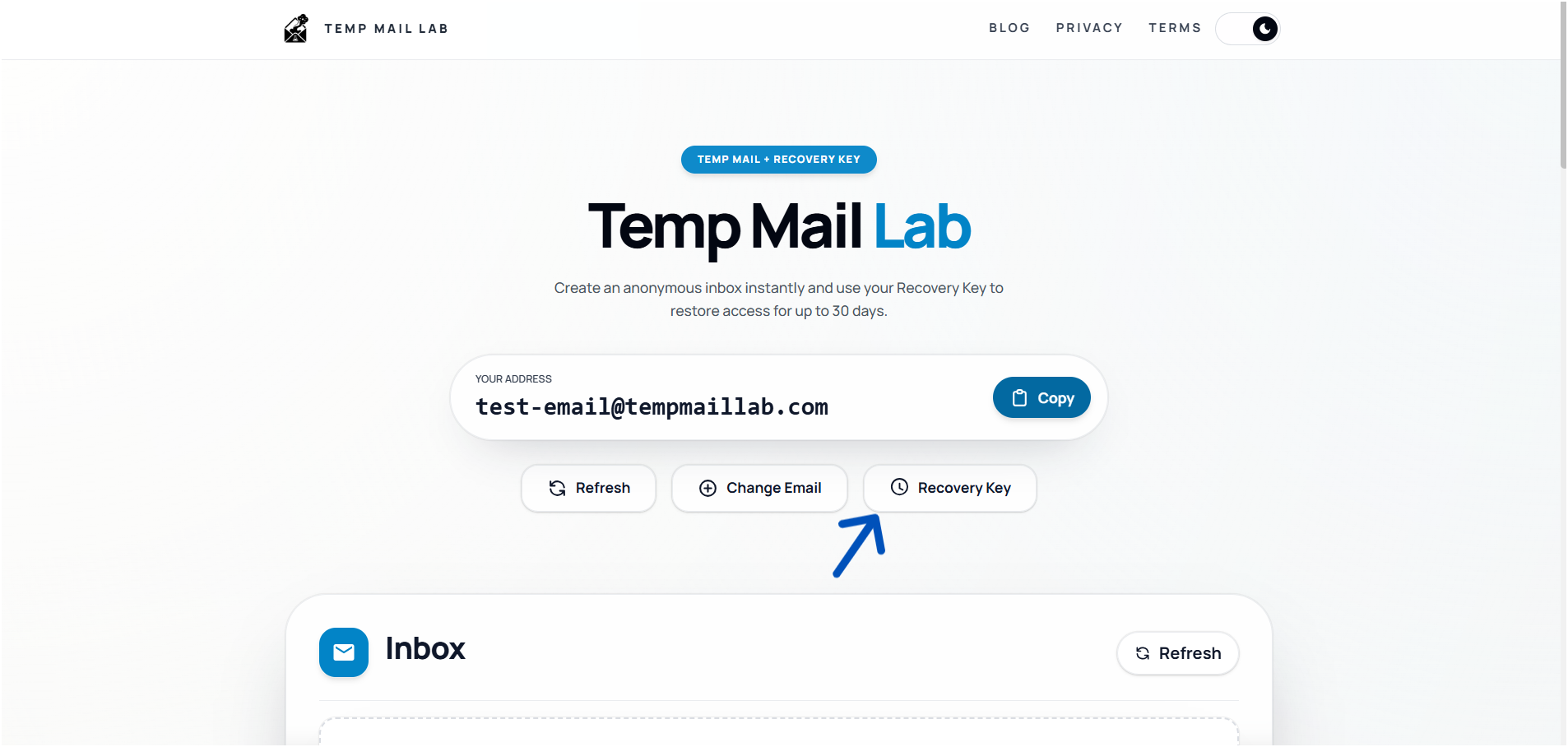
2. Copy the Recovery Key
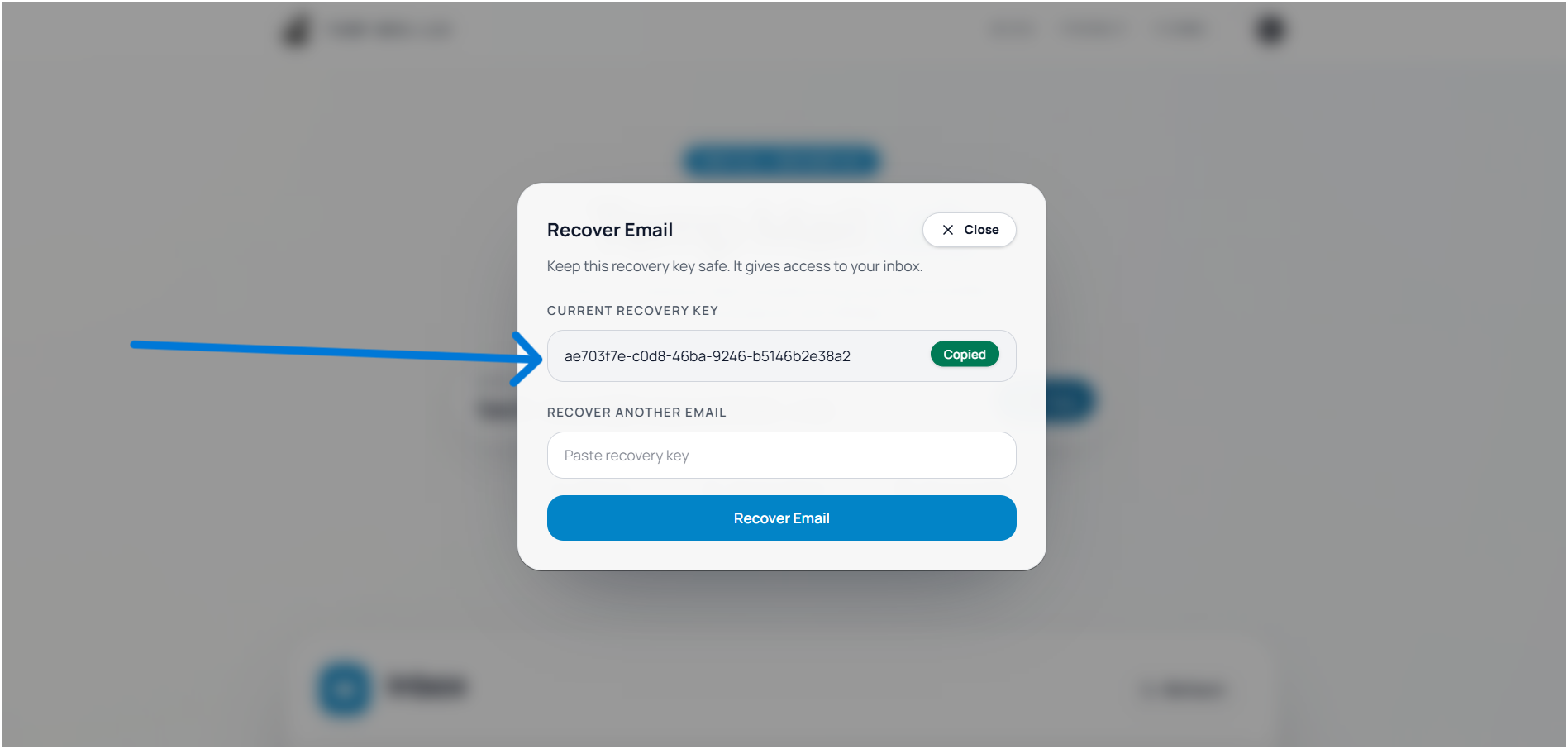
Copy the key exactly and store it in a password manager or another secure place you control. Do not publish or share it. Temp Mail Lab cannot safely recreate a lost key for you.
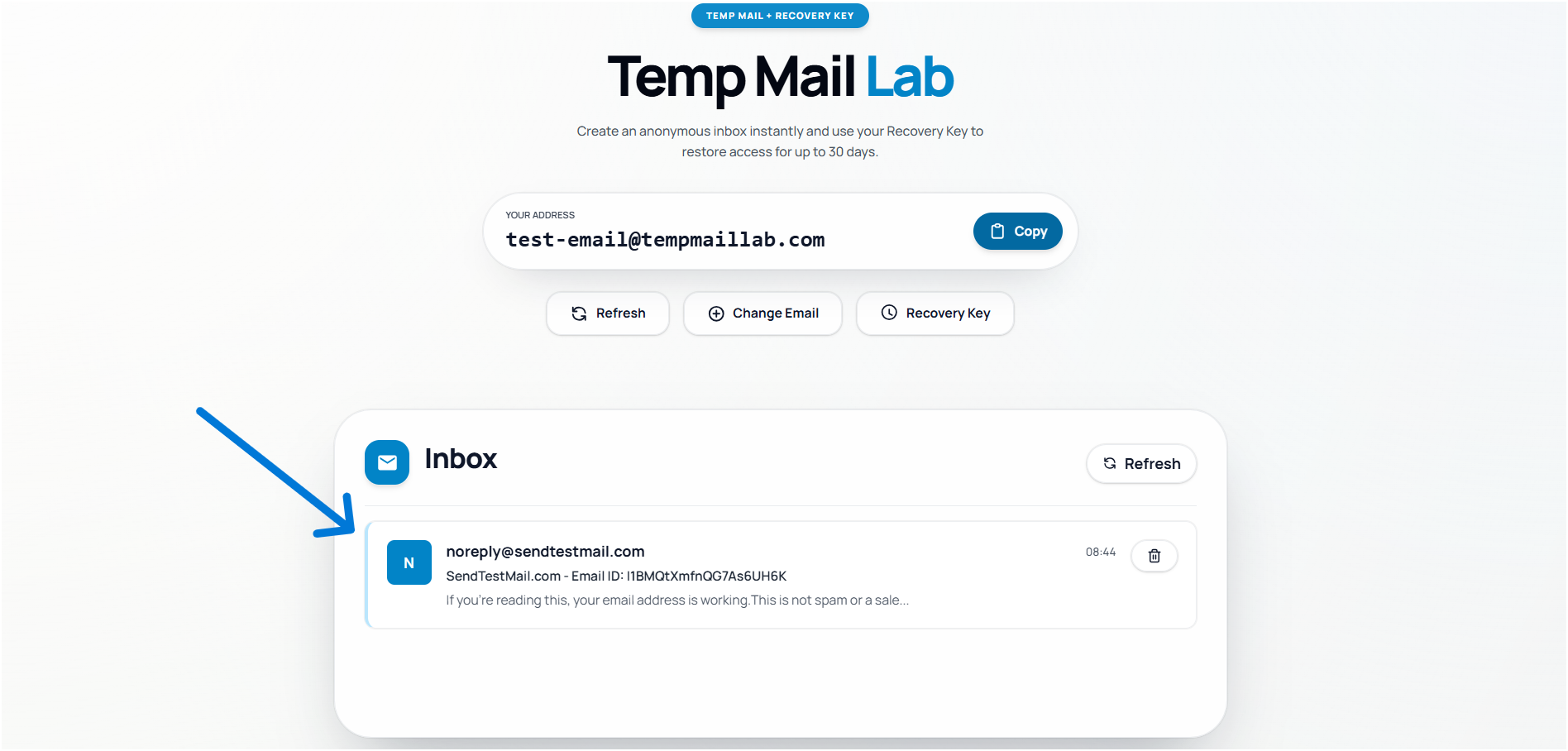
3. Read important messages promptly
Use the address only where temporary email is appropriate and permitted. Because received messages normally last about 15 minutes, copy any verification code or information you are authorized to keep before the message expires.
4. Restore the eligible address or session
Return to the regular inbox recovery option and enter the saved key. If the supported recovery record is still valid, the service can restore access to the related address or session. Only messages that still exist at that time can appear; previously deleted messages will not return.
Privacy and Operational Data
Using a temporary address can reduce exposure of your primary email, but it does not make you completely anonymous. Temp Mail Lab may process operational and security data needed to run and protect the service, including IP addresses or rate-limit keys derived from them, browser and request metadata, anti-bot results, session data, and temporary message content.
There is no absolute guarantee of privacy, anonymity, or security. Read the Privacy Policy and Terms of Service for the current processing, retention, and acceptable-use details.
Frequently Asked Questions
Does the Recovery Key restore old messages?
No. It restores only the supported address or session record. Messages that have expired or been deleted cannot be recovered with the key.
Do messages stay for the full recovery period?
No. Incoming messages are normally deleted about 15 minutes after receipt even when the address or recovery record remains available longer.
What happens when the recovery record expires?
The key can no longer restore that address or session through the supported recovery workflow. Do not rely on temporary email for accounts or records that require dependable long-term access.