
Educational purpose: This guide explains the topic in clear language to help readers make safer, informed, and lawful choices.
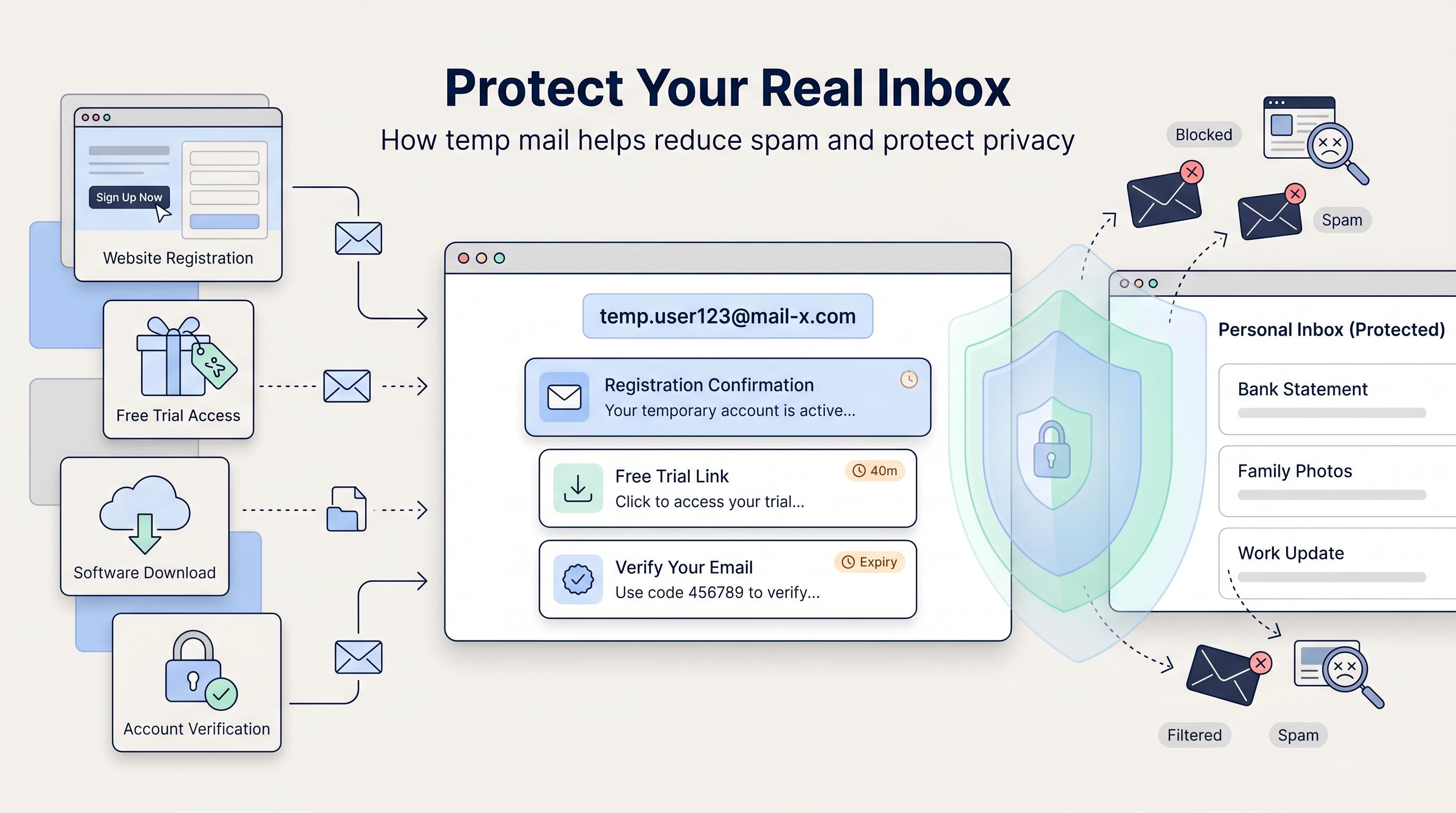
A temporary email address can help separate short-lived sign-ups and verification messages from your main inbox. It is useful for reducing unwanted email and limiting where you disclose your primary address, but it is not a tool for bypassing access rules, creating deceptive accounts, or becoming anonymous online.
What Is Temporary Email?
Temporary email provides a disposable inbox for receiving messages without giving every site your primary email address. Different services use different lifetimes. On Temp Mail Lab, an eligible regular address and recovery record can remain available for up to 30 days, while incoming messages are normally deleted about 15 minutes after receipt. The separate 10 Minute Mail tool has a short session and no Recovery Key.
Practical Benefits
- Reducing exposure of your primary email: a site receives the temporary address instead of the address you use for long-term personal or work communication.
- Separating temporary sign-ups from your main inbox: one-time confirmations and short-lived notifications do not have to mix with important mail.
- Reducing future spam exposure: abandoning a disposable address can stop later marketing sent to that address from reaching your primary inbox.
- Testing systems you own or are authorized to test: developers and QA teams can use temporary inboxes for legitimate registration and notification testing.
Responsible Use Cases
Downloads and gated resources
You may use a temporary address for a download or resource only when the publisher permits it and you are otherwise entitled to access the material. Do not use temporary email to evade payment, eligibility checks, or access restrictions.
Free trials and product evaluations
A temporary address can separate permitted trial communication from your main inbox. Use it only if the provider allows temporary addresses, and follow the trial's eligibility and account rules. Do not create repeated trials, multiple accounts, or other sign-ups to bypass limits.
Short-term sign-ups
Temporary email may be appropriate for a short-lived, low-risk sign-up when the site's rules allow it. Always respect the terms, eligibility requirements, usage limits, and account policies of every website or service you use.
Authorized development and testing
Use temporary inboxes to test applications you own or have permission to assess. Keep testing within the authorized scope and do not use the service to create abusive traffic or accounts on third-party systems.
Privacy Limits
A disposable address reduces exposure of your primary email, but it does not provide complete anonymity or protection from every form of tracking.
- It does not hide your IP address from the sites and network providers involved in a request.
- It does not prevent browser fingerprinting or stop sites from correlating browser, device, account, cookie, or behavioral signals.
- It does not block all cookies, analytics, advertising identifiers, or other tracking technologies.
- Temp Mail Lab may process operational and security data such as IP addresses or derived rate-limit keys, request and browser metadata, anti-bot results, session data, and temporary message content to operate the service and prevent abuse.
Best Practices
- Use a permanent address for banking, healthcare, government services, purchases, subscriptions, or any account that needs reliable long-term recovery.
- Read short-lived messages promptly. A recoverable address does not preserve expired messages.
- Treat a Recovery Key like a password. Anyone who obtains it may be able to access the related inbox while the recovery record is valid.
- Do not use temporary email to impersonate others, automate abusive sign-ups, create deceptive accounts, evade bans or limits, repeat a trial, or access content or services without permission.
- Review the Privacy Policy and Terms of Service as well as the rules of the third-party service you are using.
Conclusion
Temporary email is a practical way to separate permitted short-term communication from your main inbox and reduce disclosure of your primary address. Its value depends on using it within site rules, understanding that messages are short-lived, and recognizing that it does not make you anonymous or eliminate online tracking.